
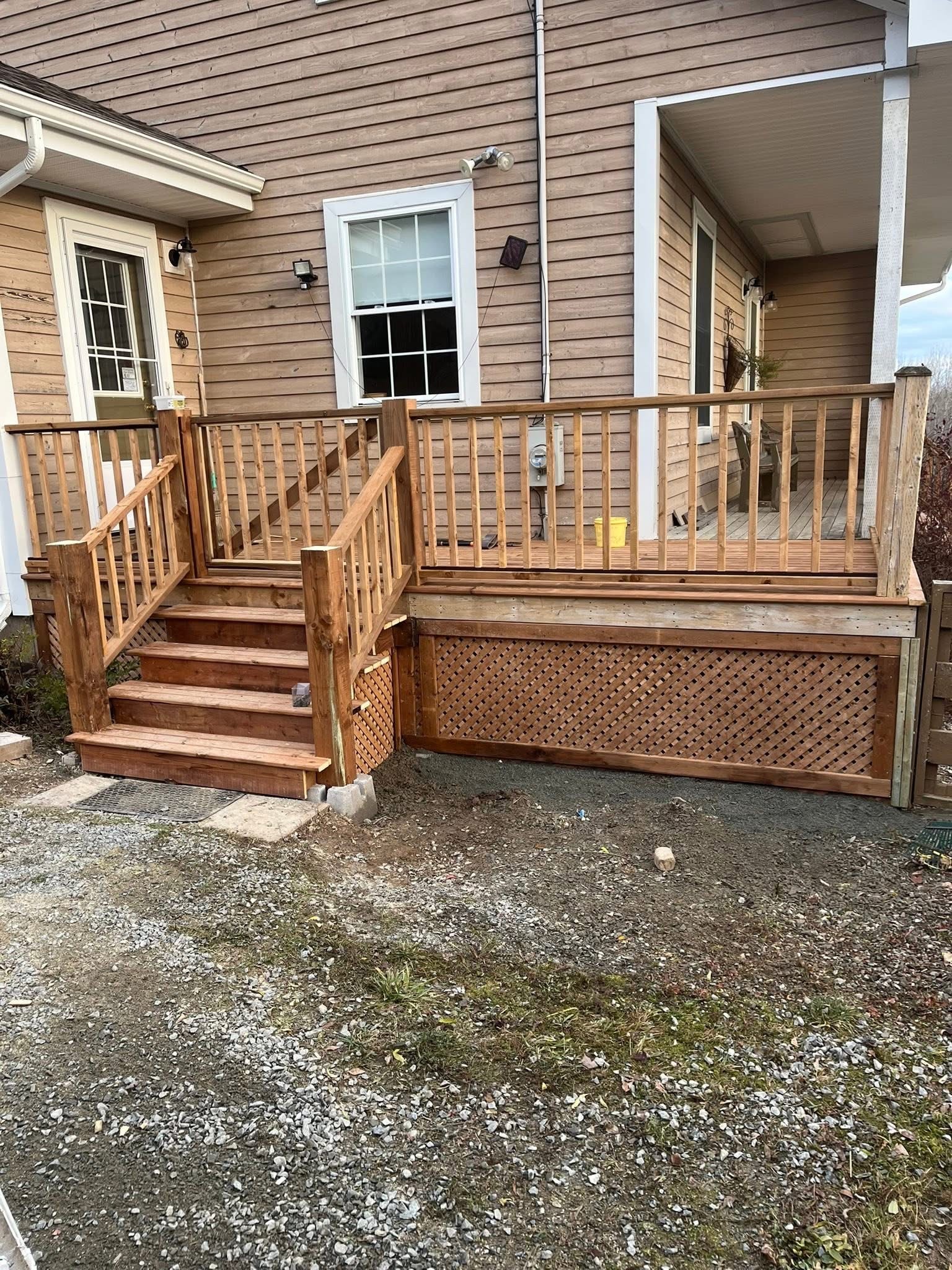
Deck building Halifax is one of the best ways to enhance your outdoor living space, but the coastal climate and municipal regulations require careful planning.
From navigating HRM permit rules to choosing materials that can withstand salty air and heavy snow, this guide covers everything you need to know for a successful build in 2026.
1. Navigating Halifax Permits and Regulations
Most deck projects in the Halifax Regional Municipality (HRM) require a Building Permit to ensure safety and structural integrity.
- When a Permit is Required: You typically need a permit for any new deck, replacement of an existing one, or structural changes.
- Exemptions: Low-level, freestanding decks (less than 2 feet above grade) may not require a permit, but it is always best to verify with HRM’s Home Improvement Permits.
- The Application Process: Applications can be submitted online via the HRM Customer Portal. You will need a site plan showing property boundaries and a construction plan detailing joist spans, beam sizes, and footing depth (minimum 4ft for frost protection).
- Permit Fees: Fees are generally calculated at $5.50 per $1,000 of the project’s estimated value, with a minimum fee of $25 plus a $50 Development Permit fee.
2. Choosing Materials for the Halifax Climate
Halifax’s weather—ranging from humid, foggy mornings to heavy winter snow—demands durable materials. Deck builders Halifax are on top of it tho, have no fear!
- Pressure-Treated Wood: The most budget-friendly option. It is treated to resist rot and insects but can twist or warp as it dries in the local climate.
- Composite Decking: Popular brands like NewTechWood or those found at The Home Depot Canada offer low-maintenance alternatives that resist moisture, fading, and UV damage.
- PVC Decking: For maximum moisture resistance, PVC is ideal for “foggy Halifax mornings” as it doesn’t absorb water or splinter.
- Thermally Modified Wood: High-end options like Thermally Modified Ash provide the natural beauty of wood with enhanced stability and resistance to decay.
3. Estimated Costs for deck building
While prices vary based on complexity, here are general estimates for Halifax deck building projects:
- Labour Rates: Typically range from $15 to $45 per square foot, with some contractors charging hourly rates between $50 and $75.
- Total Project Cost: Expect to pay between $30 and $100 per square foot for a full build (materials and labour).
- Material Example: A standard 14×20 deck using composite materials may range from $3,840 to over $12,000 for materials alone.
4. Recommended Local Deck Builders Halifax
When hiring local deck builders in Halifax , ensure your contractor has liability insurance and is familiar with the Nova Scotia Building Code.
One such deck building company in Halifax is William Wilson Renos! Deck builders Halifax are one of the top deck building and outdoor summer projects company in the Halifax and Dartmouth mainland Nova Scotia area of the province.
They have been around for years and show up on time and within your budget. Not like the bigger companies with big overhead and a dozen employees, William Wilson deck building in Halifax is not only affordable but keeps the price low to suit any budget residential or commercial project. Deck build
The Work That Goes into Building a Deck
Building a deck is a major home improvement project that blends architectural design with structural engineering.
Whether you’re planning a DIY build or hiring a professional, understanding the core components—from the invisible foundation to the finished boards—is essential for a safe and long-lasting outdoor space, no matter what are of Halifax or Dartmouth you are from.
1. Planning and Design
The most successful decks begin with a clear purpose. Consider how you will use the space: will it be a quiet reading nook, a large entertainment hub, or a pool-side lounge?.
- Site Evaluation: Factor in your yard’s slope, soil type, and sun exposure.
- Permits and Codes: Most regions require a building permit for decks over a certain height (often 24 inches) or size. Consult resources like the City of Saskatoon Deck Guide for examples of required site plans and structural details.
- Budgeting: Remember to include the cost of fasteners, permits, and finishing touches, which can account for a significant portion of the total expense.
2. The Foundation: Substructure Anatomy
A deck’s longevity depends on its hidden framework.
- Footings and Posts: Concrete footings must reach below the frost line to prevent shifting during freeze-thaw cycles. Metal anchors then secure the vertical posts to these footings.
- Ledger Board: If the deck is attached to your home, a ledger board is bolted to the house’s framing. Proper flashing is critical here to prevent water from rotting your home’s rim joist.
- Beams and Joists: Beams carry the main weight of the deck, while joists provide the horizontal “ribs” that support the deck boards. Standard joist spacing is typically 16 inches on center, though 12 inches is often required for composite decking.
3. Selecting Decking Materials
Your choice of material affects both upfront cost and long-term maintenance. Deck Building Halifax has you covered for all the essentials need to start your new deck!
- Pressure-Treated Wood: The most affordable and common option, but requires regular staining to prevent warping and splintering.
- Natural Woods (Cedar/Redwood): Naturally resistant to rot and insects with a beautiful aesthetic, but still require periodic sealing.
- Composites and PVC: Made from recycled plastics and wood fibers, these materials are virtually maintenance-free and rot-resistant, though they have a higher initial cost.
- Aluminum: A premium, ultra-durable, and fireproof option that is becoming popular for modern designs.
4. Safety and Finishing Touches
The final stage involves elements that ensure the deck is safe for use.
- Railings and Stairs: Most building codes require railings for any deck elevated more than 24 to 30 inches. Balusters must be spaced closely enough that a 4-inch sphere cannot pass through.
- Fasteners: High-quality exterior-grade screws or hidden fastener systems are preferred over nails to prevent boards from popping up over time.
- Lighting and Accessories: Integrated LED post-cap lights or stair lighting can extend the deck’s usability into the evening.
For a deeper dive on what goes into deck building or to get a quote for a new deck, reach out to William Renos in Halifax.